SolarFlame String Lights and the Solar Saturation Myth
 Maya ChenContributing Editor
August 3, 2026. This analysis examines the technical requirements for positioning SolarFlame String Lights to ensure consistent energy conversion in residential landscapes. It is intended for consumers who prioritize functional reliability over purely aesthetic arrangements.
The Fallacy of Passive Solar Placement
The conventional wisdom says that solar lighting is a 'set it and forget it' technology. Most homeowners assume that if a space feels bright during the day, it is sufficient for photovoltaic charging. Here's the part nobody talks about: ambient light is not the same as direct solar irradiance. According to Les Jardins Lighting, solar panels should ideally be positioned at a tilt angle of approximately 30 degrees during the summer months to maximize energy capture. Most consumers ignore these angular requirements, placing their lights in the shadow of eaves or under dense pergolas, then expressing frustration when the discharge cycle fails before midnight. Run the math: a panel shaded for just two hours of peak sunlight can lose up to 40% of its potential battery storage. This isn't a failure of the battery chemistry; it's a failure of spatial planning. American Home Shield notes that for systems with separate panels, the placement of that specific component is the single most critical variable in the system's longevity. If the panel isn't seeing the sun, the string is just expensive plastic.
Engineering Resilience with SolarFlame String Lights
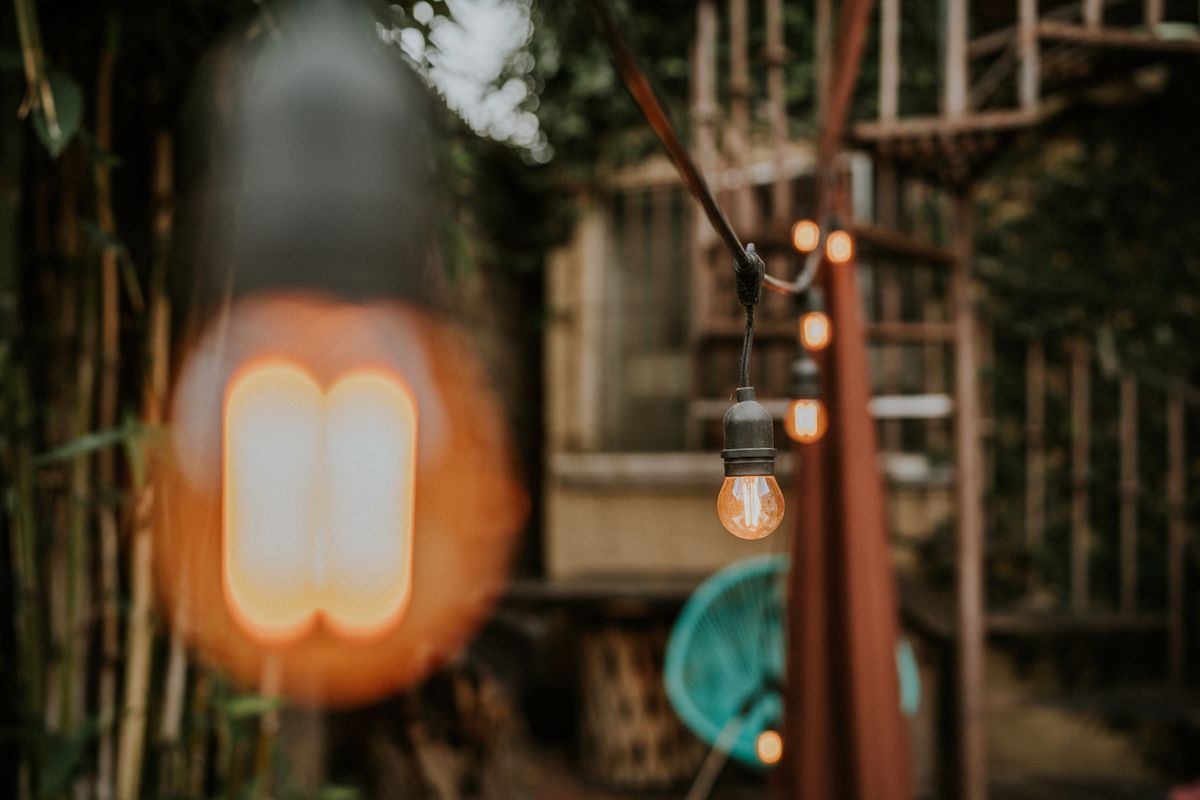
Photo by Amar Preciado on Pexels
SolarFlame String Lights are engineered to mitigate some of the inherent weaknesses found in entry-level solar products, yet they remain bound by the laws of physics. The system utilizes high-efficiency monocrystalline cells that are more sensitive to the light spectrum than standard polycrystalline alternatives. This hardware choice allows for a slightly broader margin of error in suboptimal conditions, but it does not excuse poor placement. In high-traffic outdoor areas, the durability of the SolarFlame housing becomes the secondary performance metric. While many consumers focus on the 'flicker' effect or the warmth of the glow, the real value lies in the weather-sealing of the internal circuitry. Proper installation involves more than just draping wires; it requires tension management to prevent micro-fractures in the wiring. Unlike generic alternatives that use thin-gauge copper, SolarFlame String Lights utilize a reinforced casing designed to withstand wind-load when properly anchored. The efficiency of the charge-to-discharge ratio is optimized when the panel is clear of debris like pollen or dust, which can reduce output by an additional 15% if left uncleaned.
A Framework for Strategic Outdoor Illumination
To move beyond the 'trial and error' method of decorating, a systematic approach to placement is required. This framework prioritizes energy harvesting first and aesthetic impact second. Before mounting your SolarFlame String Lights, conduct a site audit at 10:00 AM, 1:00 PM, and 4:00 PM to identify the true path of the sun relative to your structures. This data-driven approach ensures the hardware performs to its rated specifications rather than failing due to environmental obstruction.
- Verify the solar panel has an unobstructed 180-degree view of the southern sky.
- Maintain a minimum clearance of 12 inches from any overhanging foliage that may grow into the panel's sightline.
- Ensure the panel is mounted at a 30 to 45-degree angle to prevent water pooling and maximize UV absorption.
- Check that the lead wire from the panel to the first bulb is not under mechanical tension.
- Confirm that the mounting surface is vibration-stable to prevent internal component fatigue over time.
Shop SolarFlame String Lights here.
Sources
Photo by Ramsés Castillo on Pexels
- Easy Outdoor Lighting Tips: Solar Light Placement, Installation ...
- Top Five Usage Tips for Outdoor Solar Lights
- Where to Install Outdoor DIY Solar Landscape Lighting