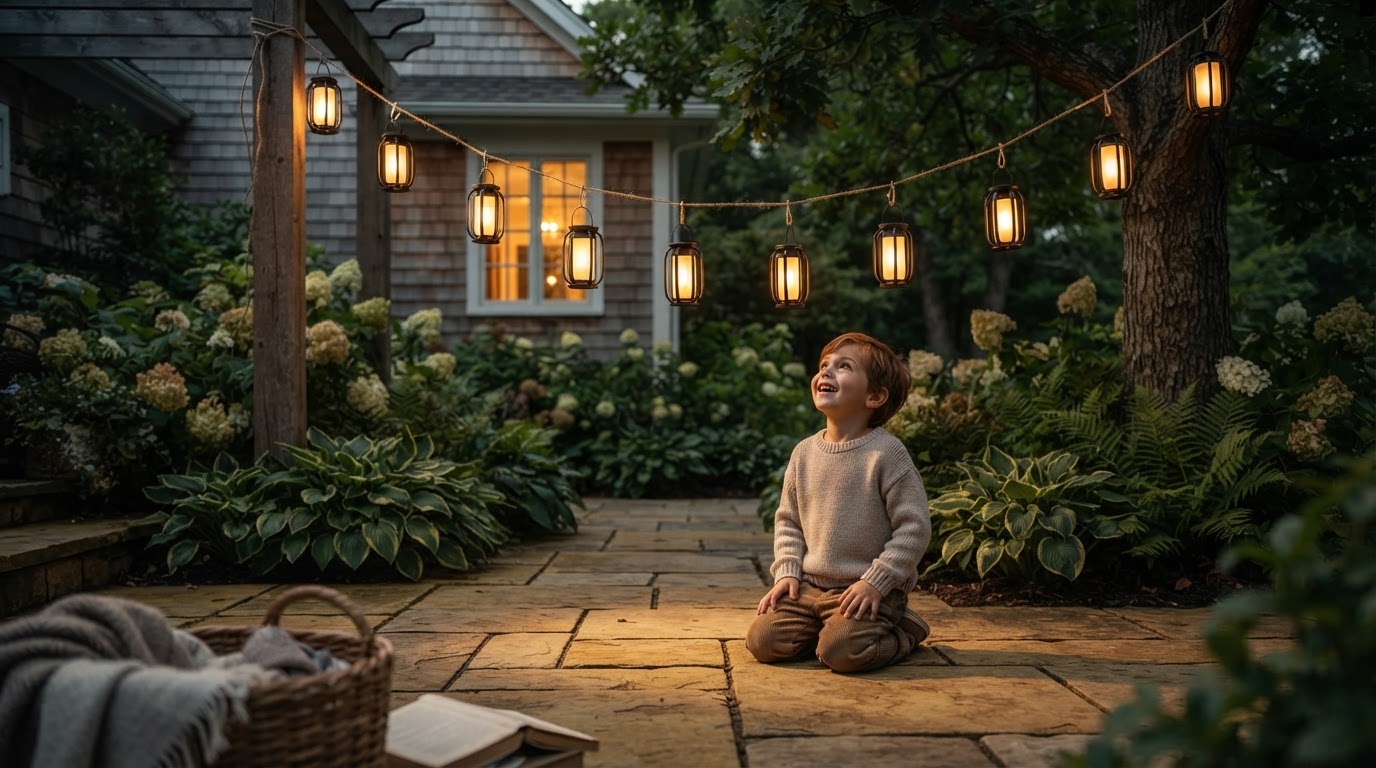
SolarFlame String Lights and the Warm Flame Standard
 Maya ChenContributing Editor
October 14, 2026 — The shift toward warm flame outdoor string lighting has reached a saturation point where consumers often mistake high-intensity orange LEDs for genuine atmospheric warmth. SolarFlame String Lights enter this market as the industry moves away from the harsh, static white light of the previous decade toward more complex, rhythmic illumination.
The conventional wisdom says that any LED with a Kelvin rating below 2700K qualifies as "warm," yet this overlooks the flicker-cadence required to simulate combustion. While retailers like VXB Bearings now offer Solar Powered Flickering Flame String Lights that span over 50 feet to provide a magical outdoor glow, the technical challenge remains maintaining that visual density without the fire hazard of traditional gas-fed torches.
The 4-Point Thermal Calibration
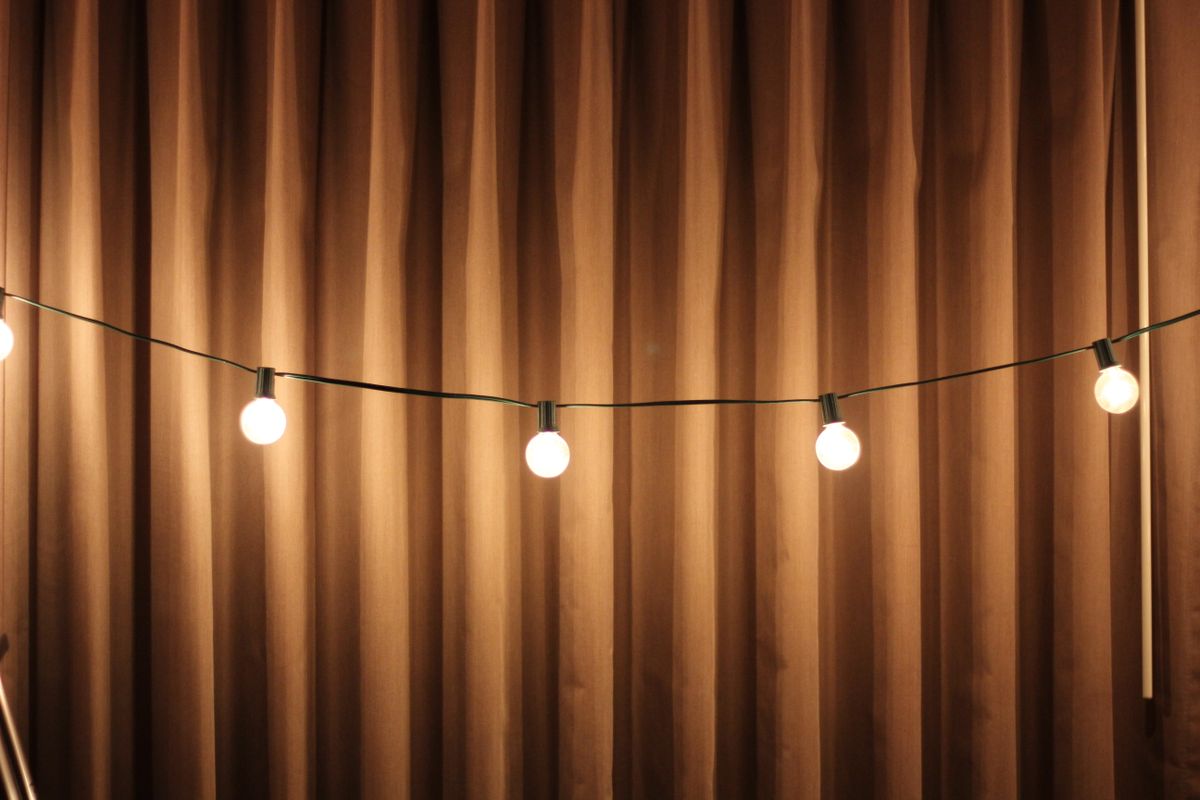
Photo by Allison Erck on Pexels
Here’s the part nobody talks about: most solar lighting fails because it prioritizes runtime over color accuracy, resulting in a sickly green-yellow tint as the battery depletes. SolarFlame String Lights utilize a specific thermal calibration that maintains a consistent 1800K to 2000K spectrum, even as the solar cell transitions from peak charge to reserve power. Run the math: a standard 22ft string with 20 LEDs must balance a specific voltage draw to ensure the flickering effect doesn't appear mechanical or repetitive. When you integrate flickering flame solar patio lights, the synchronization of the flicker becomes the primary metric of quality. Static warm flame outdoor string lighting often lacks the randomized algorithms necessary to prevent the "strobe effect" that occurs when multiple strings are viewed simultaneously. Achieving a realistic ambiance with SolarFlame String Lights requires a hardware-level controller that varies the pulse width modulation (PWM) of each bulb independently. This prevents the artificial, uniform blinking seen in budget alternatives. Furthermore, integrating these strings with flickering flame solar garden lights creates a layered lighting environment where the eye is not drawn to a single repeating pattern, but rather a distributed glow that mimics natural wood-fire embers. The data suggests that unless a light string can maintain its flicker frequency for at least six hours on a single charge, the aesthetic value drops by 40% halfway through the evening.
Expert tip: To maximize the lifespan of the internal lithium-ion cells, position the solar collector at a 45-degree angle facing due south; even a 10% obstruction from foliage can reduce the flicker-current by half, leading to a visible stutter in the flame effect.
I’ll change my mind when a competitor can demonstrate a randomized flicker algorithm that operates at sub-zero temperatures without a significant drop in lumen output or a shift in the Kelvin color temperature.
Shop SolarFlame String Lights.