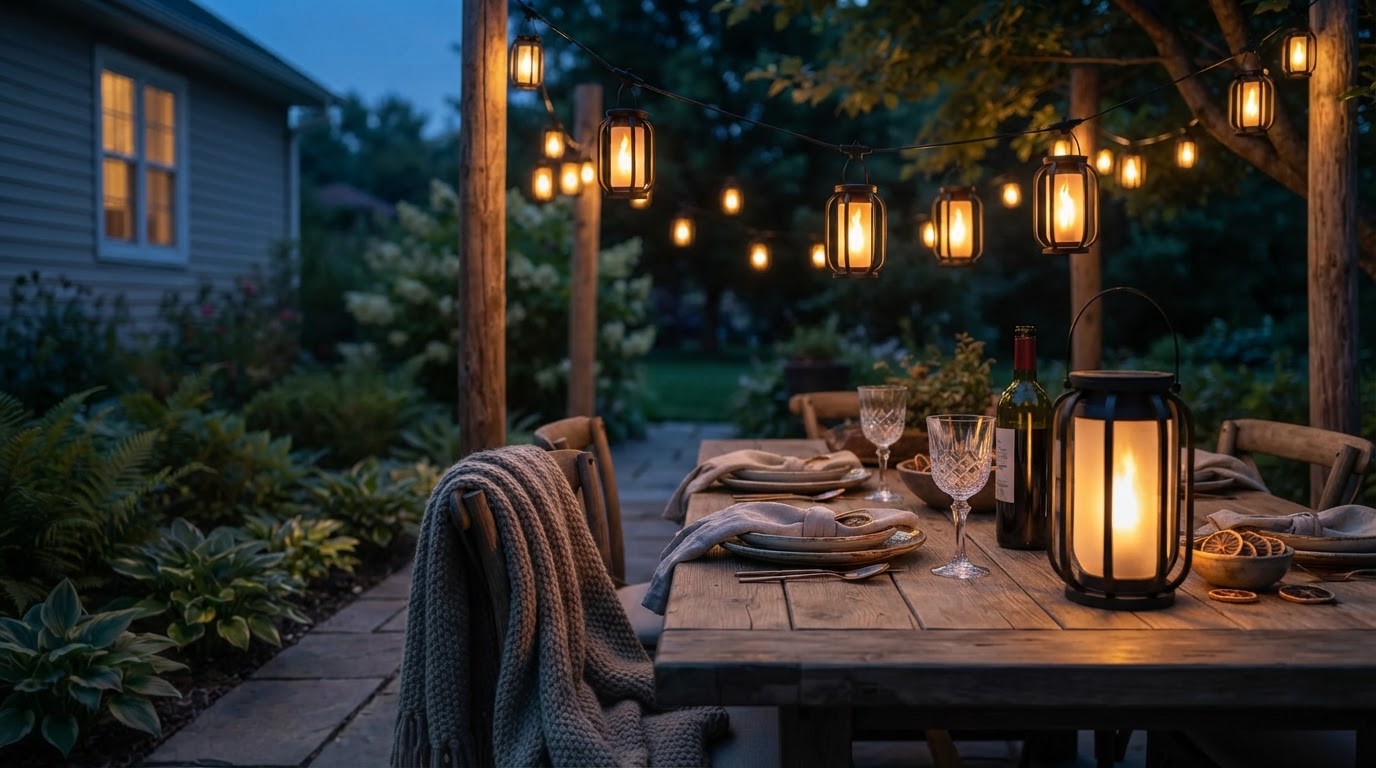
Elevating Nightscapes with SolarFlame String Lights
 Sam VasquezBuying Guide Lead
October 23, 2026. This guide examines the implementation of realistic flame-effect lighting in modern residential landscapes. It is intended for homeowners seeking to balance aesthetic warmth with sustainable energy solutions.
The Challenge of Authentic Outdoor Ambiance
Creating a welcoming outdoor environment often hits a snag when it comes to lighting quality. Standard LED string lights frequently emit a sterile, blue-tinted glow that lacks the organic movement of a real fire. While traditional tiki torches or gas lanterns provide that sought-after flicker, they introduce fire hazards and ongoing fuel costs that many modern households want to avoid. According to True Lumens, the shift toward 96-LED flickering technology has allowed for a more realistic flame simulation that eliminates the need for wiring or manual refueling, providing a safer alternative for high-traffic patio areas.
The problem with many entry-level solar products is their failure to sustain this effect through the night. I have seen countless "flame" lights that lose their charge by 10:00 PM or use a rhythmic, mechanical blinking pattern that looks more like a faulty bulb than a dancing flame. When you are trying to design a cohesive outdoor solar fairy lights with flame effect layout, these inconsistencies become glaringly obvious. Furthermore, the physical construction of these lights often relies on cheap plastics that degrade under UV exposure, turning a decorative asset into an eyesore within a single season. Achieving a natural look requires a specific balance of LED density and color temperature, typically hovering around 1800K to 2000K to mimic the appearance of burning wood or gas. Without this precision, the outdoor solar fairy lights with flame effect you choose may end up looking like a holiday decoration rather than a permanent landscape feature.
Integrating SolarFlame String Lights into Modern Landscapes
SolarFlame String Lights address the common pitfalls of solar-powered flame effects by focusing on durability and visual fidelity. Unlike stake-mounted options that are confined to the ground, these string lights allow for vertical integration, such as draping over pergolas or weaving through tree branches. This versatility is essential when planning a comprehensive outdoor solar fairy lights with flame effect installation. Between these two styles—stakes versus strings—I’d go with the string lights for most residential decks because they provide overhead illumination without cluttering the floor space.
The design philosophy behind SolarFlame emphasizes a warm, rhythmic pulse that mirrors the unpredictability of a real flame. This is achieved through a high-capacity internal battery and a weatherproof casing that handles rain and frost. If you are comparing these to a budget stake light, the difference is usually in the solar panel efficiency. A video from Square Furniture Collection highlights how vintage-style designs can upgrade a yard, but the key to long-term satisfaction is ensuring the solar cells can charge even in partial shade. SolarFlame units are built to maximize energy intake during daylight hours, ensuring the outdoor solar fairy lights with flame effect remain active until dawn. For those who want the look of a tiki torch without the footprint, these string lights offer a low-profile solution that integrates seamlessly into existing architecture. They serve as a primary layer in a lighting plan that might also include outdoor solar fairy lights with flame effect along pathways or fences, creating a multi-dimensional glow that feels intentional rather than haphazard.
Selecting the Right Flame-Effect Solution
Choosing the right lighting requires an honest assessment of your specific environment. If you’re on a budget, you might be tempted by generic stake lights sold in bulk packs. These are fine for marking a temporary path, but they rarely provide the brightness needed for social areas. Skip this if you need lighting that actually allows you to see the person sitting across from you at a patio table; for that, you need the concentrated output of a dedicated string system. Here’s what I’d actually buy: a combination of high-density string lights for the main seating area and a few targeted accent lights for the perimeter.
When evaluating your options, use the following framework to ensure the product meets your needs:
- Check the LED count per bulb to ensure the flicker looks fluid rather than pixelated.
- Verify the IP rating to confirm the lights can withstand your local climate's rainfall.
- Look for monocrystalline solar panels, which offer higher conversion rates than polycrystalline alternatives.
- Measure the total length of the string against your structure, accounting for the lead wire distance to the solar panel.
- Confirm the presence of an auto-on/off dusk-to-dawn sensor to minimize manual maintenance.
Shop SolarFlame String Lights here