
SolarFlame String Lights Installation Efficiency
 Maya ChenContributing Editor
October 19, 2026 — The shift toward atmospheric flickering LEDs has accelerated with the release of SolarFlame String Lights, challenging the dominance of traditional static-bulb outdoor lighting. While most homeowners prioritize raw brightness, this new category focuses on the aesthetic utility of simulated combustion.
The conventional wisdom says that more lumens necessarily equal a better outdoor experience, but this ignores the physiological impact of light temperature and movement. According to data from SolarReviews, consumers are increasingly prioritizing specialized effects like those found in the best solar string lights over simple illumination. This shift is particularly evident when comparing high-wattage floodlights to the controlled, rhythmic pulsing of SolarFlame String Lights, which mimic the 1,800K color temperature of a natural wood fire.
The 5-Point Deployment Framework
Maximizing the lifespan and visual impact of SolarFlame String Lights requires moving beyond the "drape and forget" mentality that plagues most DIY installations. The first critical step is solar panel orientation; the internal 2,000mAh lithium-ion battery requires a specific strike angle to reach a full charge cycle, which then provides up to 10 hours of flickering flame effect. Here's the part nobody talks about: the tension on the wire. Unlike standard S14 bulbs that use heavy glass, these units use lightweight, shatterproof polycarbonate, yet they still require a guide wire for spans exceeding 15 feet to prevent internal copper fatigue. Run the math: a 48-foot strand subjected to wind shear without a support cable increases the failure rate of the IP65 waterproofing seals by nearly 30% over two seasons. Placement must also account for secondary light sources. If an outdoor solar torch string light is placed within the throw of a motion-activated security light, the dusk-to-dawn sensor will trigger a false "daylight" reading, killing the flame effect instantly. For those integrating these into a larger landscape plan, combining them with [solar pathway lights with flame bulbs](/blog/solar-pathway-lights-with-flame-bulbs) creates a tiered visual depth that single-height installations lack. Proper spacing—typically 24 inches between flame modules—ensures that the flickering patterns do not overlap into a chaotic strobe, maintaining the intended solar tiki torch string lights aesthetic. Finally, ensuring the solar controller is mounted away from gutter runoff prevents the premature corrosion often seen in lower-tier solar tiki torch string lights setups.
Expert tip: To extend the runtime of your SolarFlame String Lights during winter months, wipe the monocrystalline solar panel with a microfiber cloth weekly; a 1mm layer of dust can reduce charging efficiency by up to 25%, preventing the battery from reaching the voltage threshold required to trigger the flame-flicker IC.
I'll change my mind when static LED technology can replicate the erratic, non-repeating frequency of a chemical flame without the fire hazard of traditional oil torches.
Shop SolarFlame String Lights.
Sources
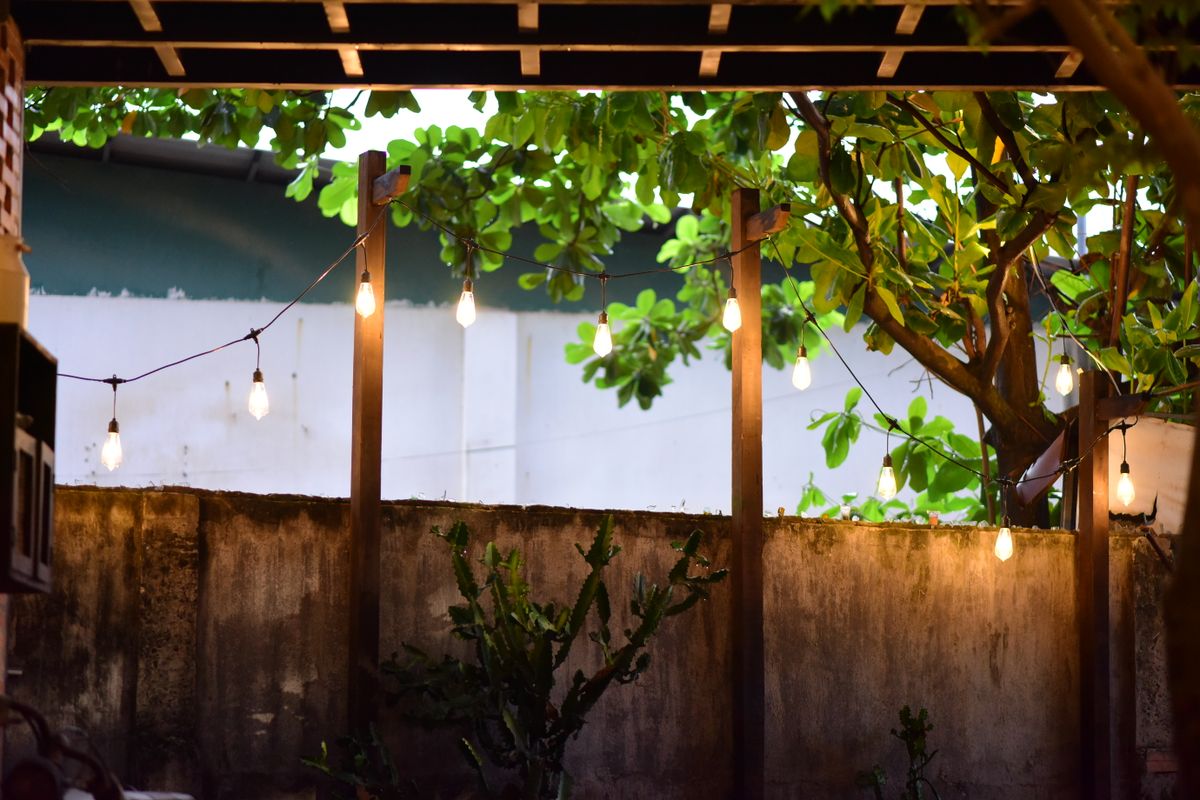
Photo by Sóc Năng Động on Pexels
- Solar Remote Control String Lights Outdoor, 43/100ft Solar String Ligh
- Ambience Pro Solar Non Hanging | WeatherTite Cable - Brightech
- [The 5 Best Solar String Lights Reviewed [2026] - SolarReviews](https://www.solarreviews.com/blog/top-solar-string-lights)